

Oldnewlands #16
On Some Golan Heights Sites and Sights
Something Old
Chances are that you’ve never heard of the Israeli equivalent of Stonehenge. Well, by now you should have guessed that we have one!
As Israeli archeologists went up on the Golan Heights after the Six Day War, they held in their hands some Syrian maps that were found in bunkers. On these, they saw a place named Rujm El-Hiri (Cairn of Wildcats). Curious, they went to investigate it and found an ancient monument - a series of concentric stone circles with a monumental gravesite at the center. The place has been left untouched for millennia.
When researchers started to find out more about the site, they learned that it has been built over millennia since, approximately, 3,000 BCE (5,000 years ago), in the early Bronze Age. The burial site was full of precious artifacts befitting an important person or family. The stones have been piled carefully to construct - you might have guessed already - a form of an ancient time-keeping device. We know that on the summer and winter solstices, rays of light would have come through between two large rocks on the site.
The Israeli archeologists named the site Gilgal Refa’im after the giants who were said, in the bible, to inhabit the region. The place today is rarely visited, despite taking up more space than the famous Stonehenge, and being older than it. Seeing it from the ground is not breathtaking, and it’s not on the way to anywhere important (unless you’re hiking the Golan Trail). We also don’t know for sure who built it and to what initial purpose. But, it’s another super-interesting thing that exists in our tiny country!
Here’s a link to the Wikipedia page, where you can view some photos. I’m not paid enough to worry about integrating copyrighted materials :)
Something New
On Wednesday, I went on a trip with my two aunts to the Golan Heights. Not far from Rujm El-Hiri is a relatively new site called Ein Keshatot (Umm Al-Qanatir). It opened during the Covid era after decades of preparations. At the heart of it is a reassembled synagogue that belonged to the Jewish village which, like other settlements in the area, was thoroughly destroyed in the earthquake of 749 CE. Unlike anywhere else, however, its stones were never used in building later buildings and so, when Israeli archeologists came to the site, they were able to find every stone from the original synagogue and, using 3D modeling, find its place in the building!
The original Jewish name of the village is unknown to us, but the Arabs who knew the ruins called them Umm Al-Qanatir, or Mother (notable place) of Arches. This is in reference to the arch-covered, voluminous spring on location. Today, the arches and adjacent pools have been reconstructed. Archeologists believe they all were part of a unique and profitable facility for producing and whitening linen. This theory could also explain the relative splendor of the community’s synagogue.
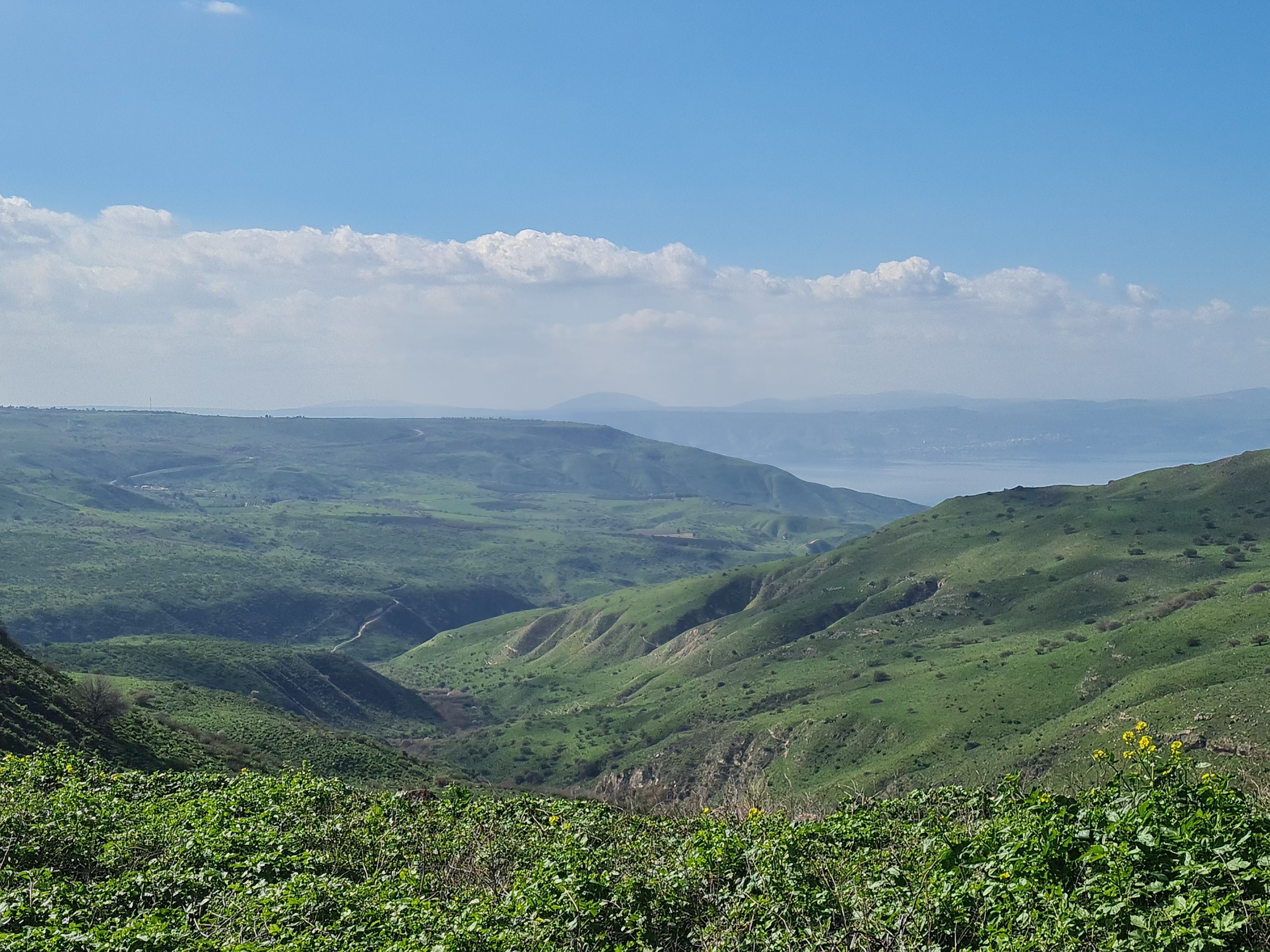
If you’re not sure what to do on your day in the Golan Heights, consider paying this cool little site a visit! It’s currently underappreciated in my view. And here is my view from Ein Keshatot toward Mt. Tabor and the Sea of Galilee:
Something Else
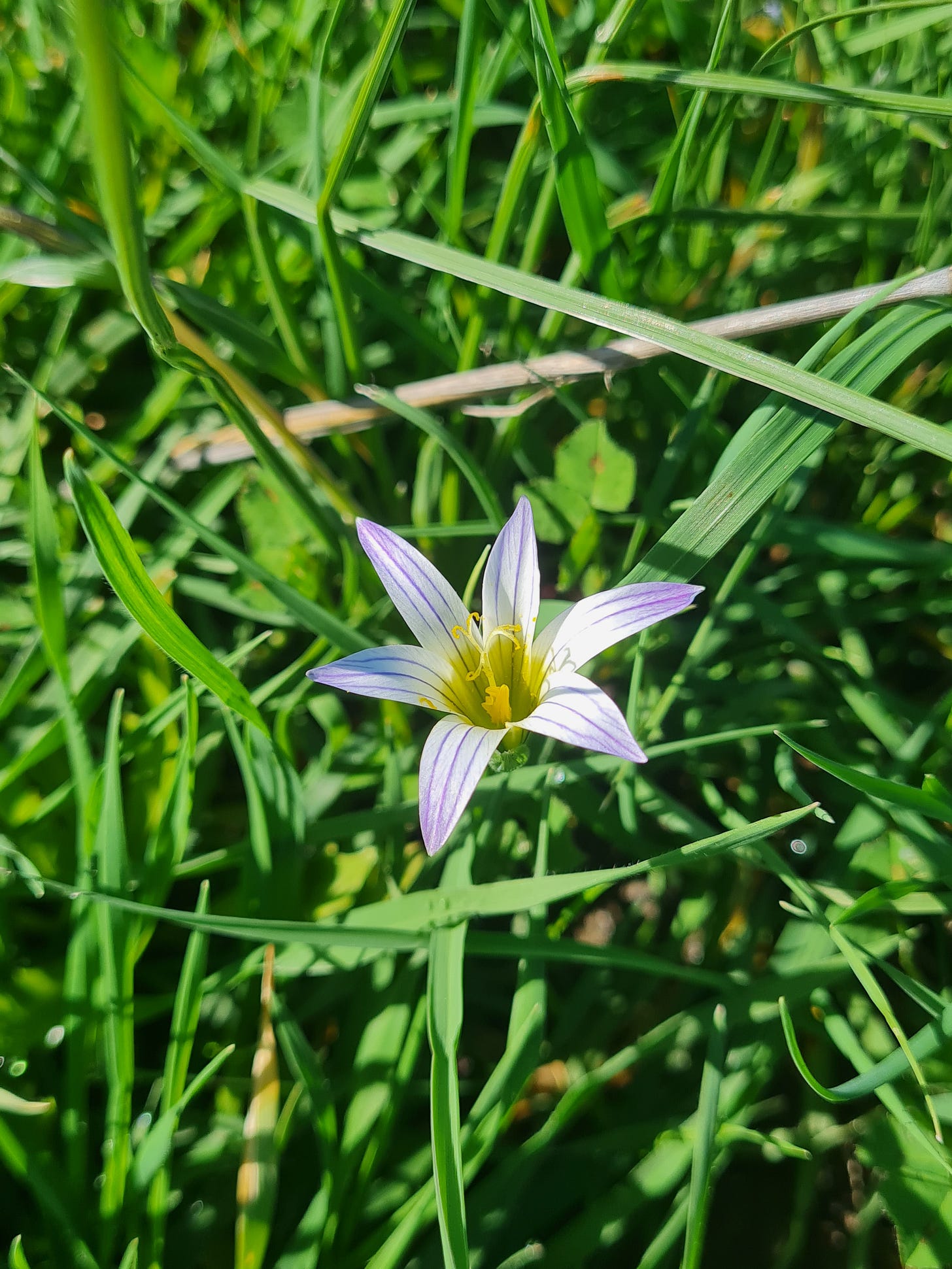
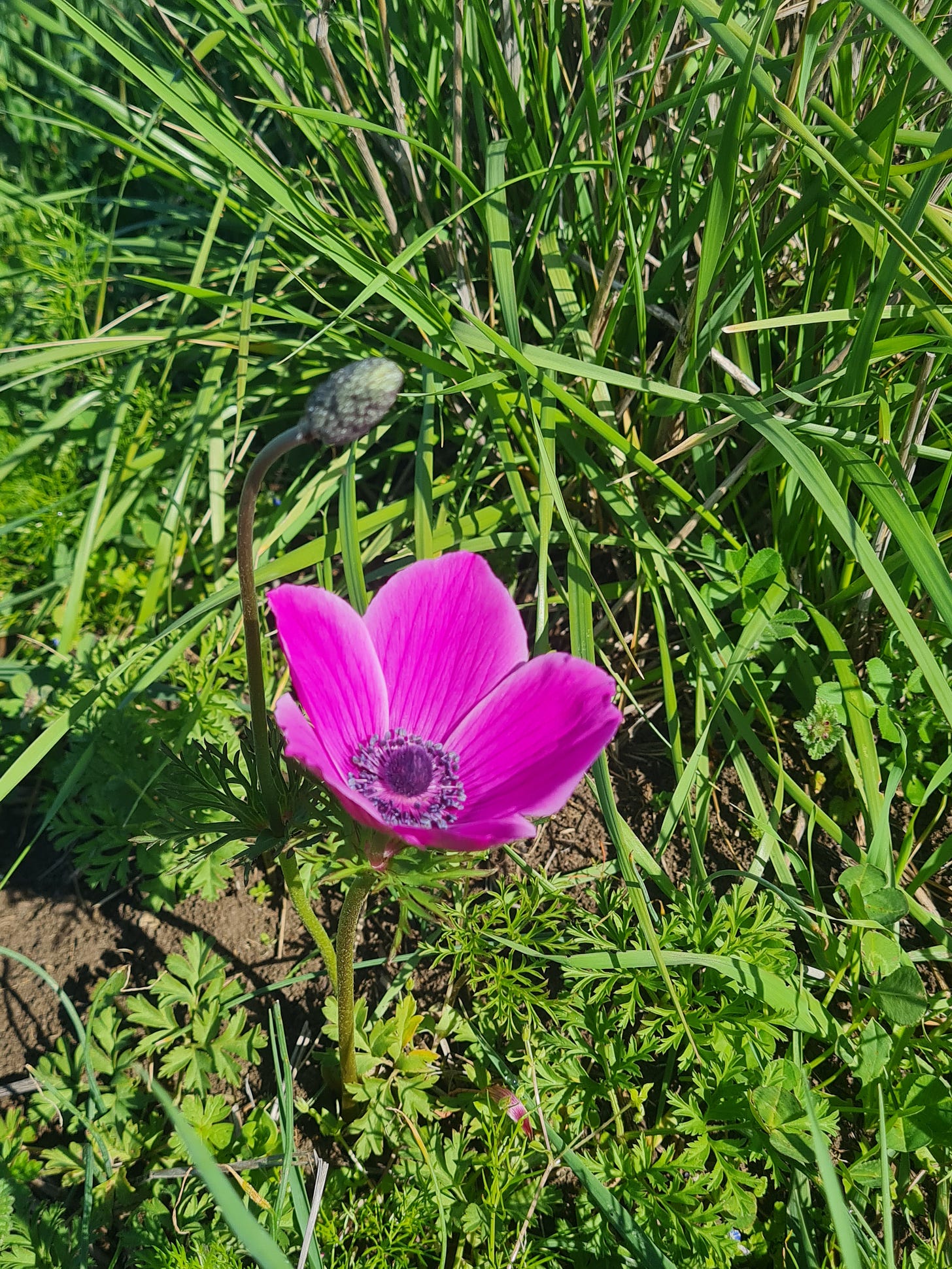
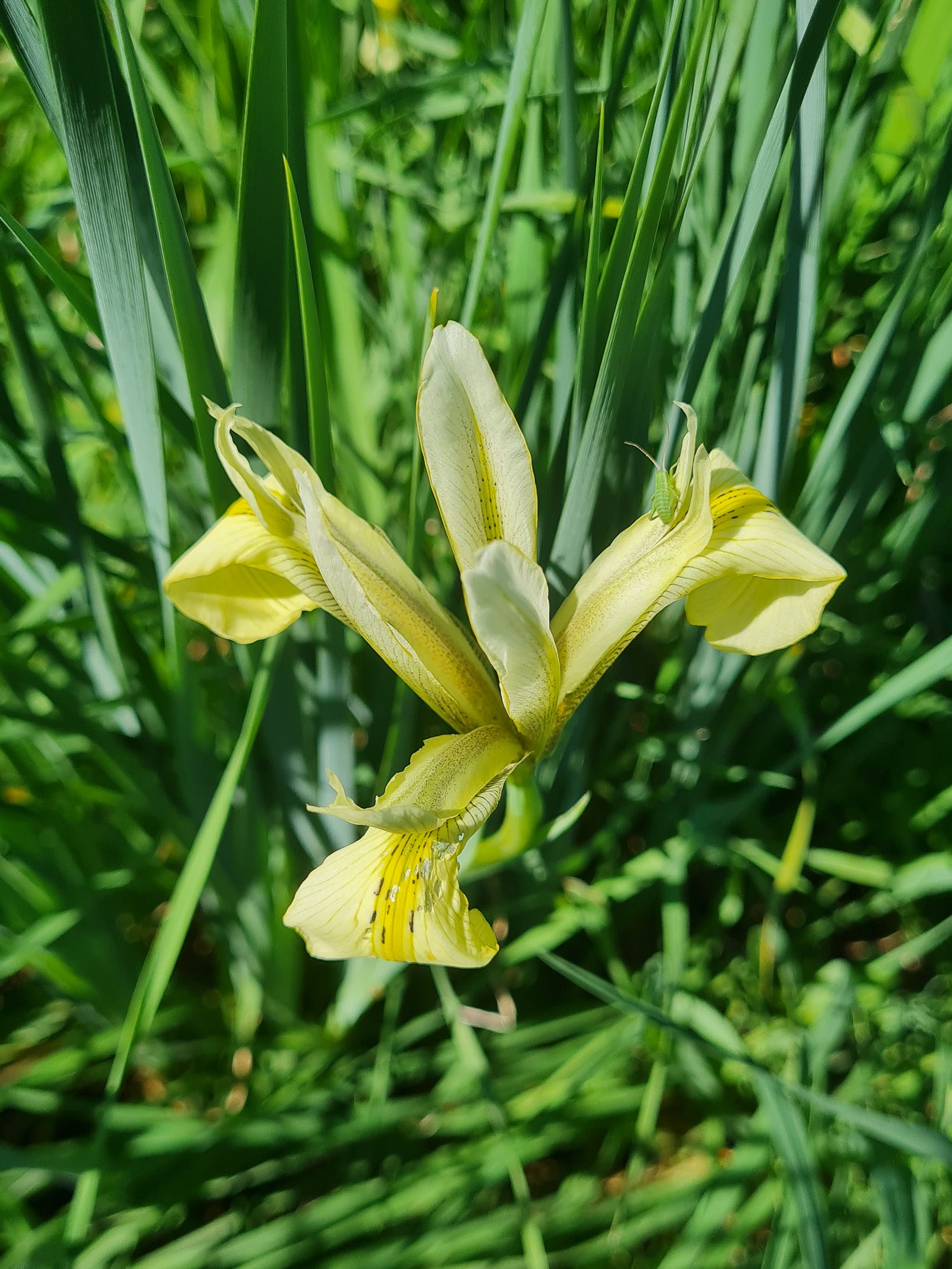
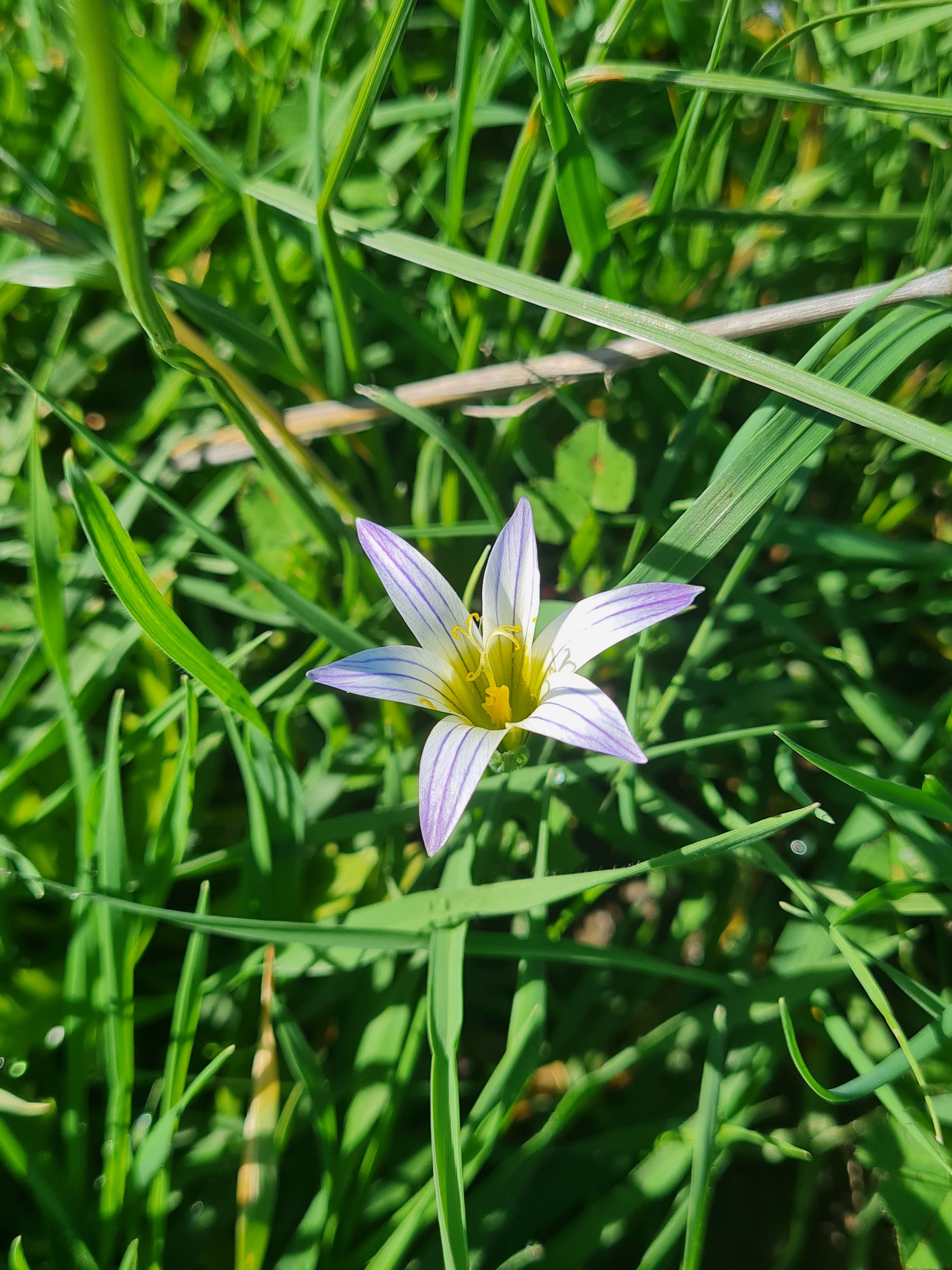
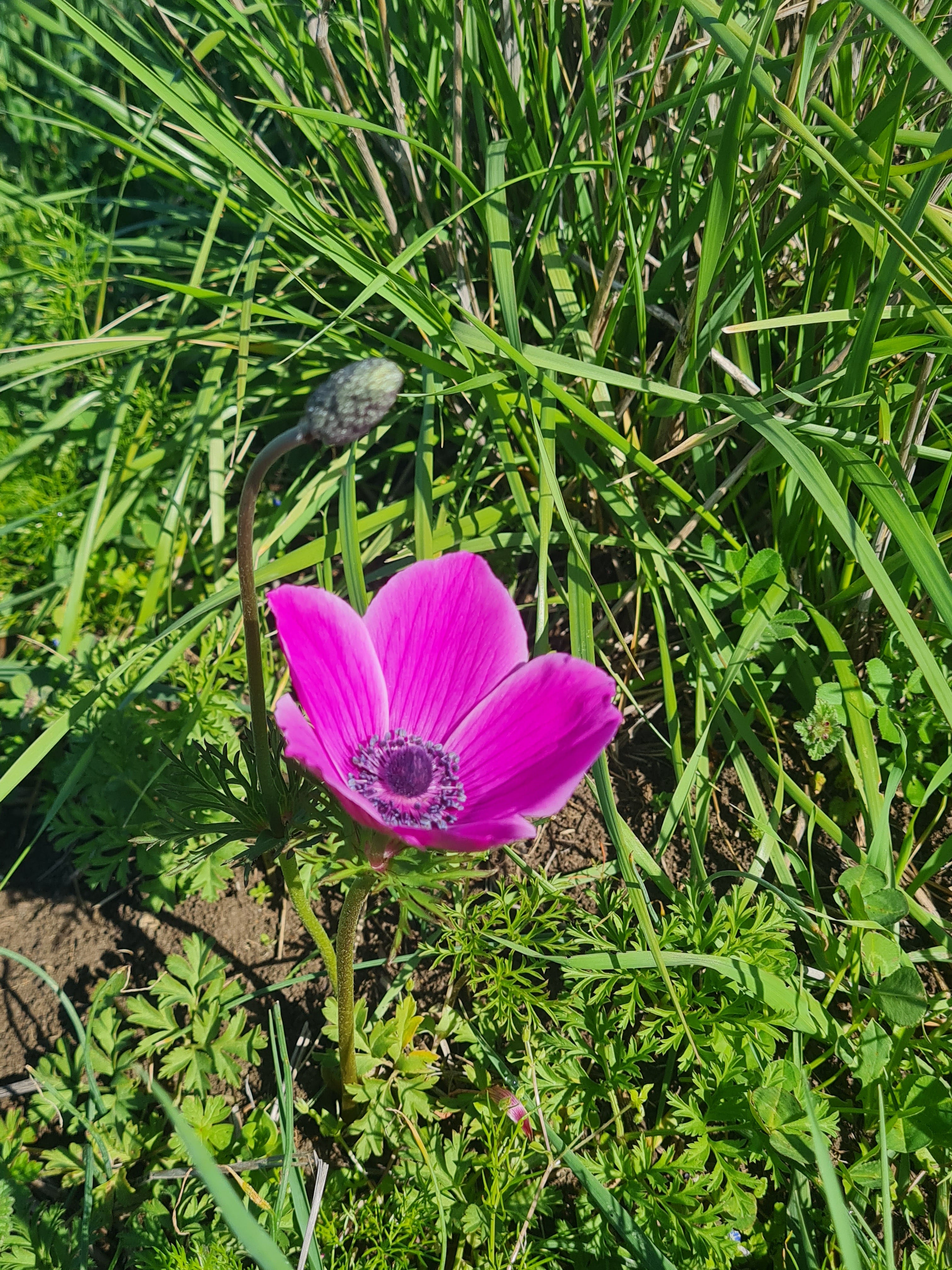
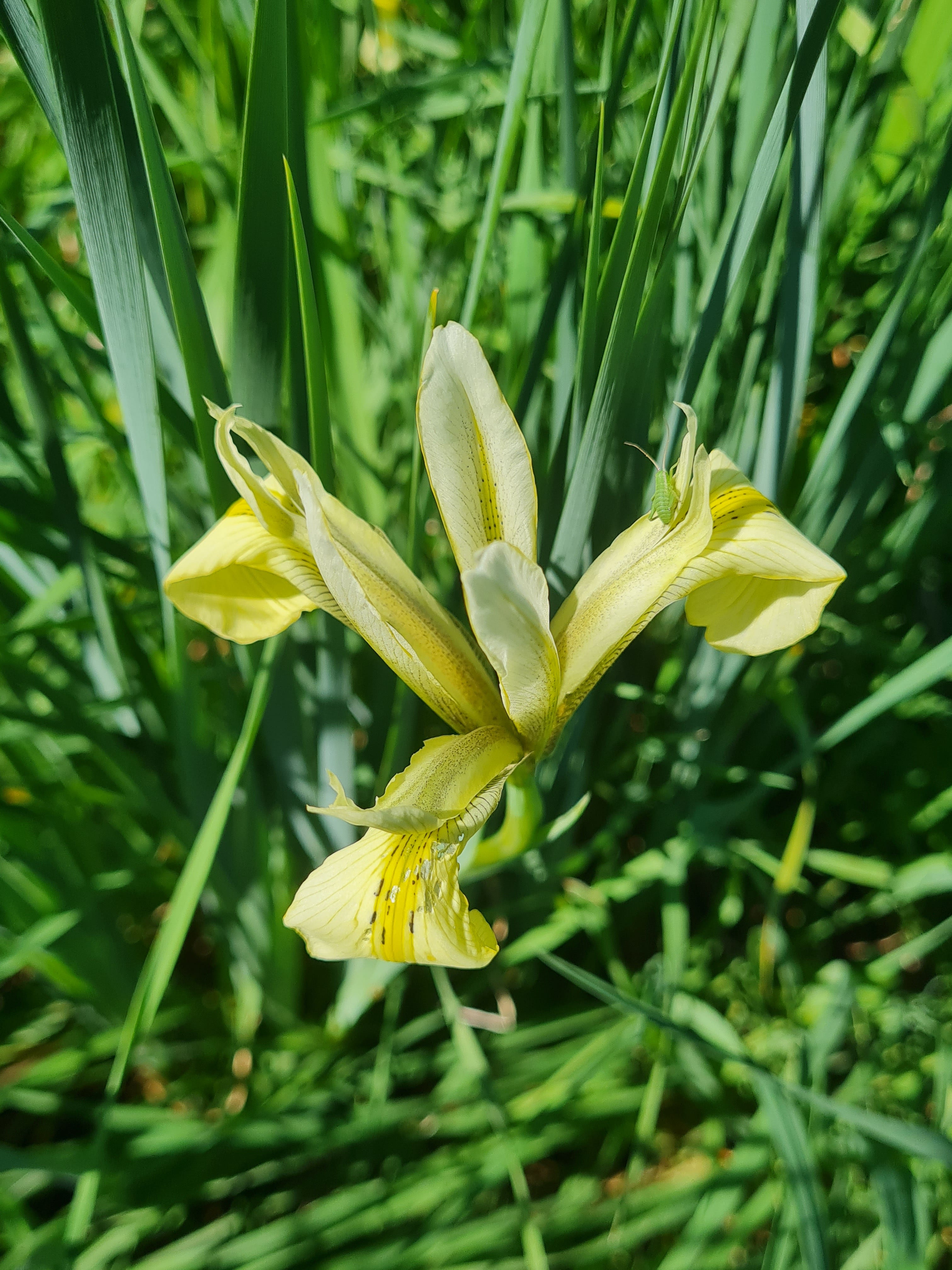
Also on Wednesday, we visited the “Nov Meadow” natural reserve. Home to the rare Iris grant-duffii, which wasn’t in bloom yet, this reserve also features many other beautiful wildflowers in their rare and vulnerable habitat - volcanic seasonal swamp. Here are a couple of them:
Violet Romulea
Coronated Anemone in a color unique to the Nov Meadow
Late edit - here’s Iris grant-duffii from a different place. I took the photo a day later
❤️